
Steffen
Jung
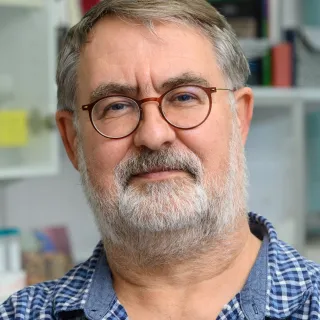
Steffen Jung began his undergraduate studies at the University of Bonn, Germany, and then moved to Cologne, where he performed his Ph.D. in the Institute of Genetics. Specifically, he used the then newly introduced gene targeting technology to define cis-acting control elements driving non-coding 'sterile' transcripts in immunoglobulin class switch recombination. In 1993, Steffen moved for post-doctoral training to Israel and in 1997, to the Skirball Institute for Molecular Pathogenesis at NYU Medical Center. There, he focused on the chemokine receptor CX3CR1 and generated reporter mice that have become widely used to study murine monocyte subsets and brain macrophages. Furthermore, he developed a novel diphtheria toxin receptor (DTR)-based cell-ablation strategy that enabled the study of dendritic cells (DC) in vivo (CD11c-DTR mice). In 2002, Steffen returned to Israel and joined the faculty of the Weizmann Institute, where he received tenure in 2009 and full professorship in 2015. Current work of the Jung lab, located in the Department of Immunology and Regenerative Biology, aims at elucidating in vivo aspects of mononuclear phagocytes, including the development and differential functions of monocytes and macrophages. Specifically, the team applies intravital imaging, conditional cell and gene ablation, combined with advanced genomic analyses, to investigate these cells in a physiological context. Recent focus is given to the study of blood monocyte subsets, monocyte-derived intestinal and pulmonary macrophages, as well as brain macrophages, including microglia and CNS-border-associated macrophages. Moreover, the laboratory is also interested in competitive fungal commensalism and its effect on host immunity.